Where Brass Becomes Soul
Fifty years of devotion, cast in every idol that leaves our workshop. From the lanes of Dariba Kalan to your sacred space — a living tradition, passed hand to hand.
Born from the lanes
of Dariba Kalan
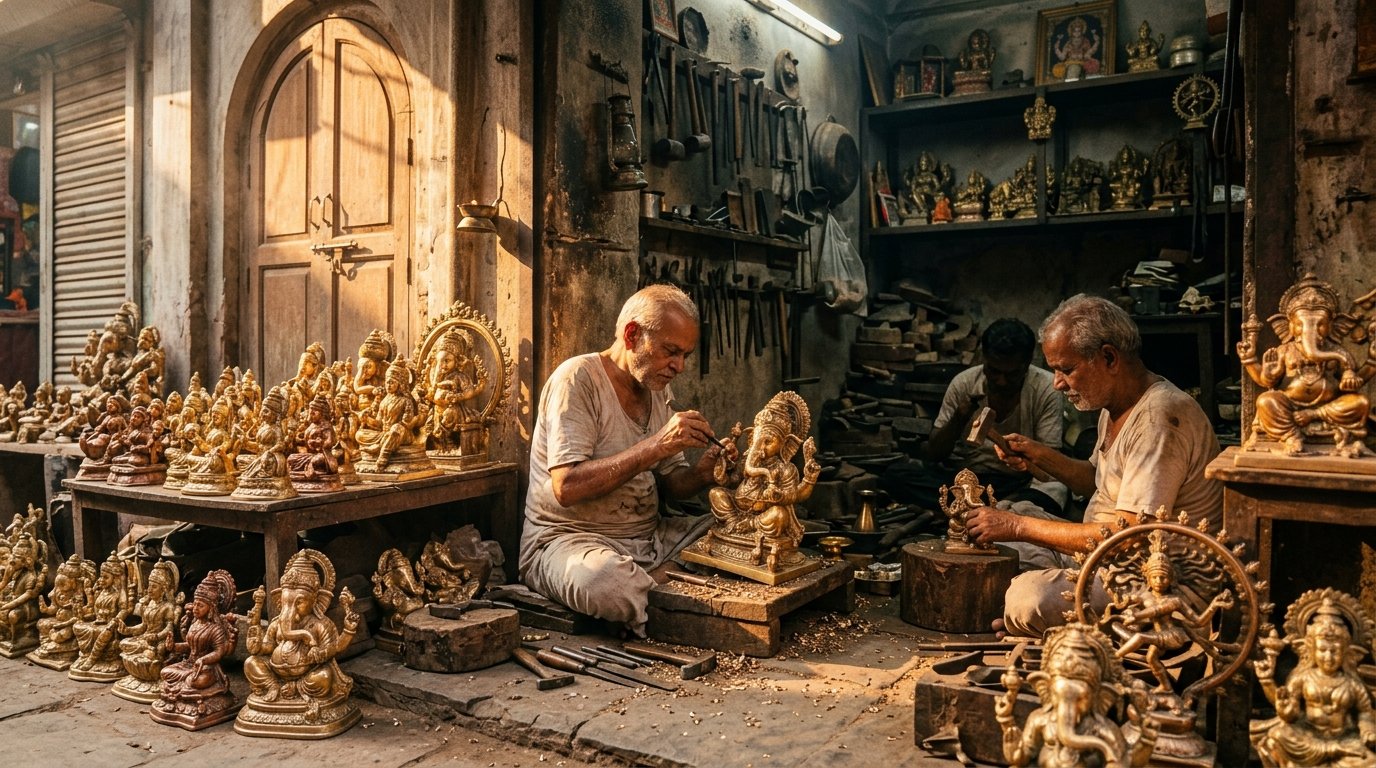
Our first workshop opened behind Dariba Kalan in 1974, casting murtis for the temples of the old city. Sumit Jain — a young karigar with dusty hands and an eye that could judge a proportion by candlelight — started with a single furnace, two apprentices, and moulds inherited from his father.
The moulds have changed; the measure has not. Every idol we make is still proportioned to Shilpa Shastra, the ancient Hindu canon of sacred iconography. Each is checked by hand before it is polished, before it is packed, before it travels from our lane to its final resting place in a home or mandir.
Forty karigars work here now. Most learned the chisel from a father or an uncle. The ones who finish the faces — the most sacred task — have been doing only that for twenty years.
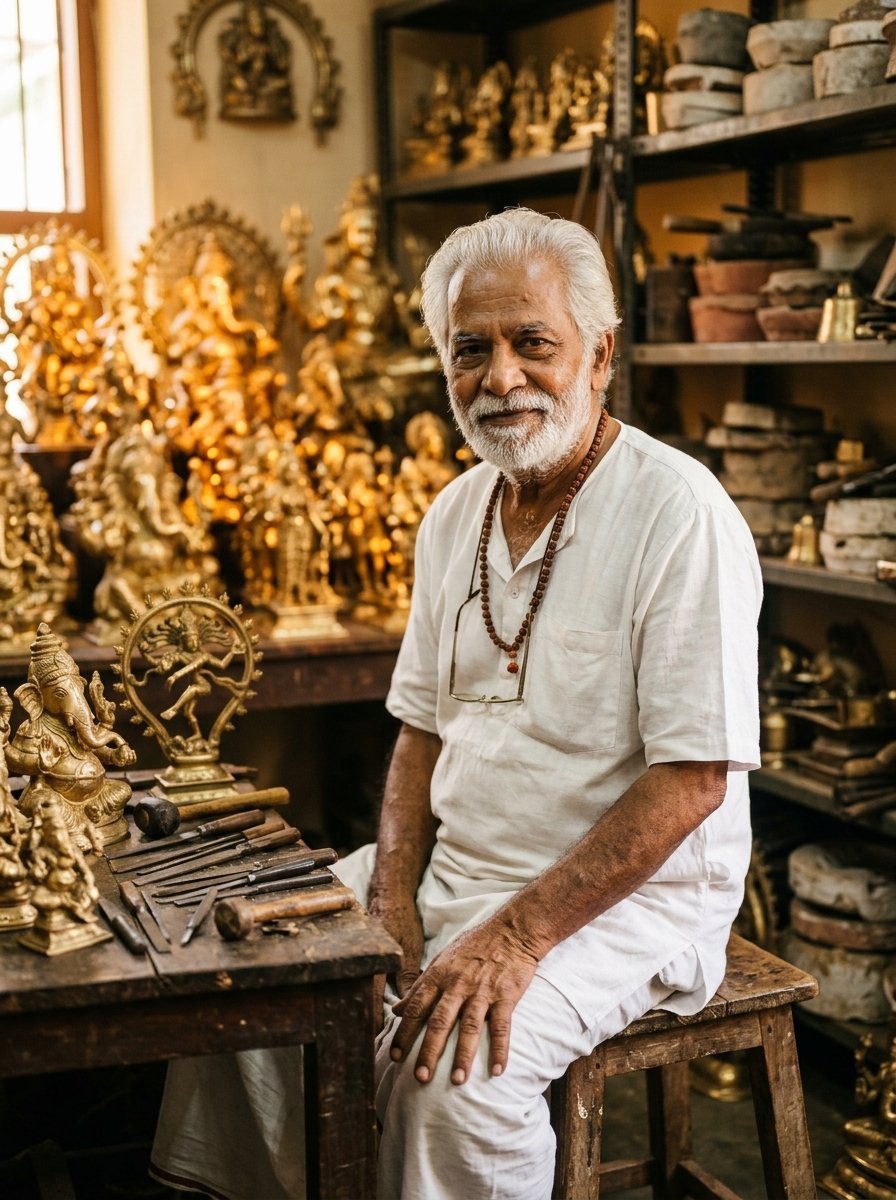
A brass idol is not finished when the casting is done. It is finished when the craftsman can look into its eyes and feel the deity looking back.
Three pillars of every piece we make
Shilpa Shastra
Every proportion, every gesture, every attribute follows the ancient Sanskrit canon of sacred iconography. No shortcuts. No approximations. The tradition is either honoured or it is not.
Generational Craft
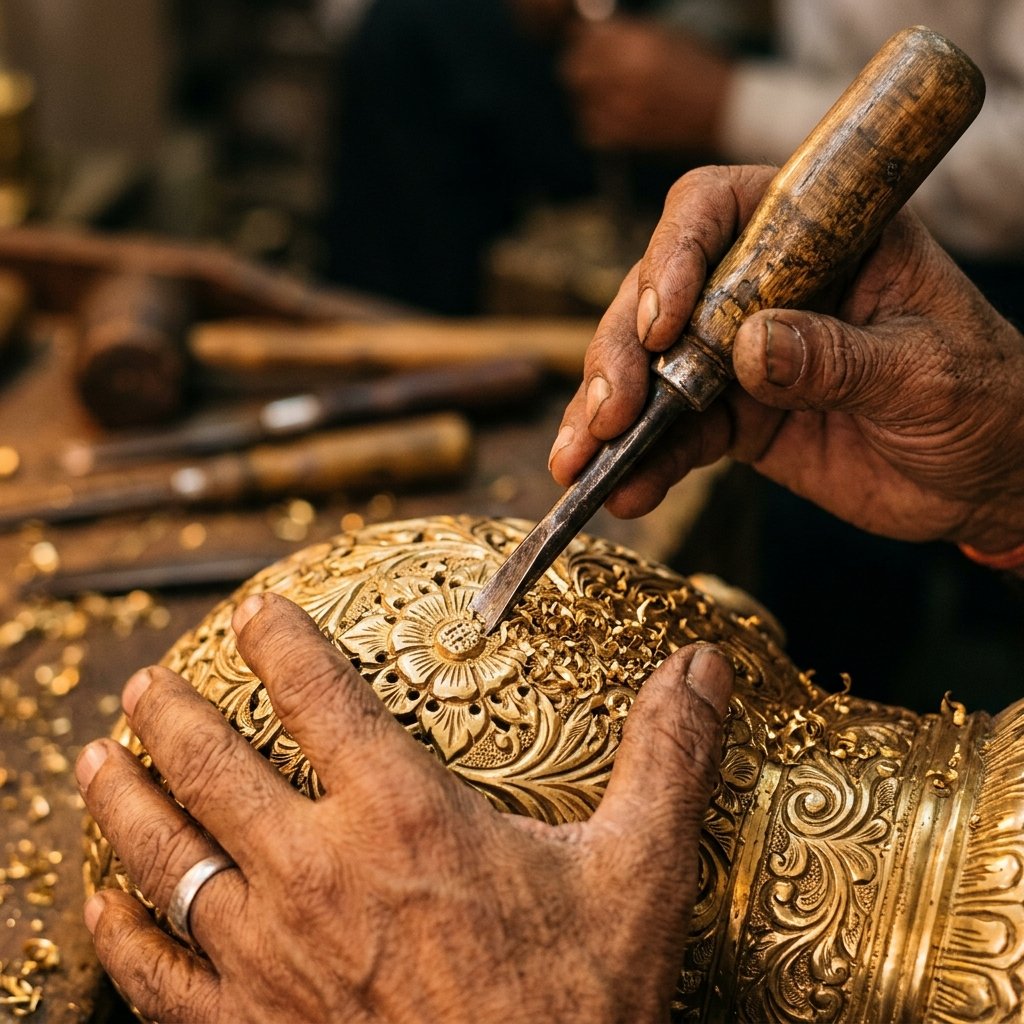
Skills that cannot be learned from a manual. Absorbed over a decade of apprenticeship, watching a master's hands, then repeating the same stroke ten thousand times until the hand remembers.
Sacred Intention
We do not make decorative objects. We make vessels for divine presence. That difference lives in the intention behind every cut, every polish, every finishing touch done in quiet concentration.
Five decades,
one unwavering purpose
The First Furnace
Sumit Jain lights the first furnace behind Dariba Kalan with two apprentices, one set of inherited moulds, and a certainty that the old way is the right way.
Temple Commissions
The workshop receives its first large temple commission — a set of Ashta-Ganesha for a new mandir in Varanasi. The name begins to travel beyond Old Delhi's lanes.
Second Generation
Aman Jain, son of the founder, joins the workshop after studying metallurgy. He introduces new alloy ratios that produce a richer, longer-lasting patina without sacrificing warmth.
Online Presence
Digamber Arts opens its first online catalogue, making the atelier accessible to devotees across India and the Indian diaspora worldwide — without compromising craft for volume.
Forty Karigars, One Measure
Forty craftsmen, every idol still checked by hand, still proportioned to Shilpa Shastra. The furnace burns the same way it did in 1974. So does the intention behind it.
We make nothing for the shelf.
Everything we cast is meant to be worshipped.
We turn away work that cannot be done properly at our pace. We do not make tourist souvenirs. We do not compromise Shilpa Shastra for a delivery deadline. If you want a piece from us, you are agreeing to wait for craft — not for a product.